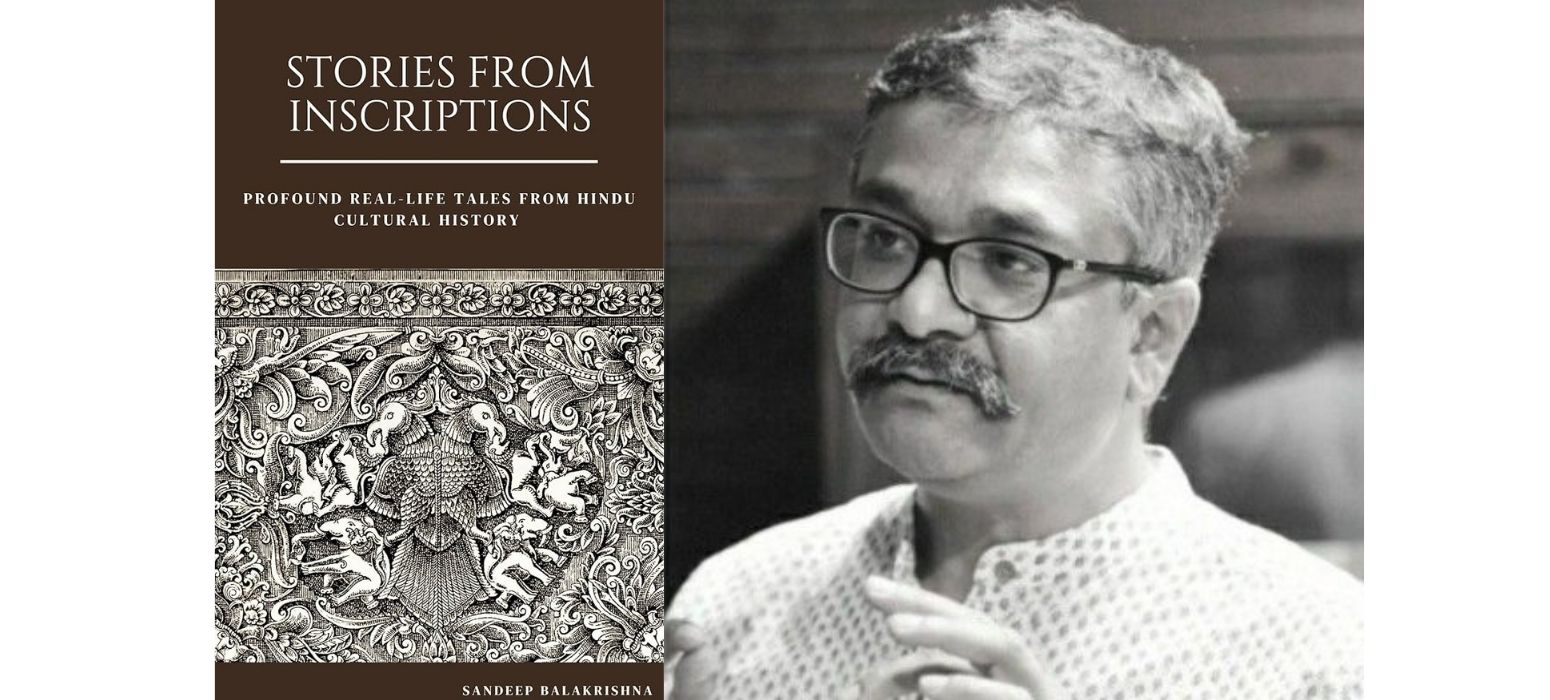
The book serves as a voice against false Hindu narratives through the translation of 15 real-life episodes from various epigraphs found across the Deccan region of India.
Sandeep Balakrishna, the author of the book, is an independent researcher and cultural analyst. He specializes in writing evidence-based narratives about Indian history and Hindu civilization. Formerly, he spent nearly two decades as an IT professional at major multinational corporations like Capgemini and IBM before shifting his focus to correcting the records of his national history and its narratives.
He currently serves as Chief Editor of The Dharma Dispatch and Prekshaa, which are online journals dedicated to Indian history and culture. He is also a Fellow of the Indian Council for Philosophical Research.
His notable works include Tipu Sultan: The Tyrant of Mysore, Seventy Years of Secularism: Unpopular Essays on the Unofficial Political Religion of India, and 10 Lessons from Hindu History in 10 Episodes, all focusing on Sanatana Dharma, Indian philosophy, and the sociopolitical impact of historical events.
The book’s content is drawn from inscriptions of kings, ministers, merchants, and warriors dating from the 9th century CE to the 17th century CE.
It draws attention to and refutes the colonial narrative, or rather the British view of Bharat, by highlighting the well-thought-out, intricate, and unified political, economic, and social systems of ancient India.
It showcases the incredible value systems of our ancestors and highlights their remarkable talents and feats.
As its primary objective is to challenge long-established narratives, it requires strong historical proof to support it — and that is exactly what the author has provided.
Here is your text with minimal edits for grammar, clarity, and correctness, keeping the original meaning intact:
It uses literal translations of grants, temple records, and letters of the ancient Indian community, combined with the author’s remarkable and occasionally sarcastic storytelling style to engage the reader in historical stories about heroism, generosity, cultural unity, and values like austerity and piety.
Each chapter focuses on specific themes such as a merchant’s endowment to an ancient temple, the condition of a specific class of entertaining Brahmins, and the tactical and social mistakes made by Hindu kings during invasions. These are usually supported by visual aids like photos, illustrations, or even links and QR codes leading to additional data.
Throughout the book, the author presents a transparent and patriotic response to what he describes as conspiracies raised against his cultural history by expressing his own opinions on the matter, backed by several proofs. He writes in the book:
“Our inscriptions are the mute witnesses waiting to narrate the story of our civilization to the patient and willing listener; they reflect the fundamental values that Hindus lived and died by — truth, dharma, piety, charity, compassion, reverence for women, sacrifice, loyalty, heroism, and valour.”
Furthermore, I feel it is a fantastic and urgent must-read for anyone who wants to understand the reality of ancient Indian civilization through a more ‘indigenous’ lens than that presented in many history books. The book, with 4.4-star ratings on retail platforms like Amazon, remains an exciting read for admirers of ancient Indian civilization.
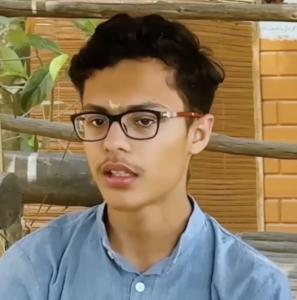
Vairom is a student of Kashyapa Varga. He joined Vidyakshetra in 2023 along with his twin sister Vainavi and younger brother, Abheer. He is an all-rounder. Be it academics or natural dyeing research or Bharatanatyam, he gives his 100% and does with utmost sincerity. He is also good at compering. We enjoy his presentations during the events at the Gurukula.